
Success Story · Industry and Technology · Operations Support
From Doubt to Better Collaboration.
Mark de Vries, team manager at Spie Building Solutions, initially found the approach a bit vague. The assessment gave him insight into how his team experiences the work and collaborates.
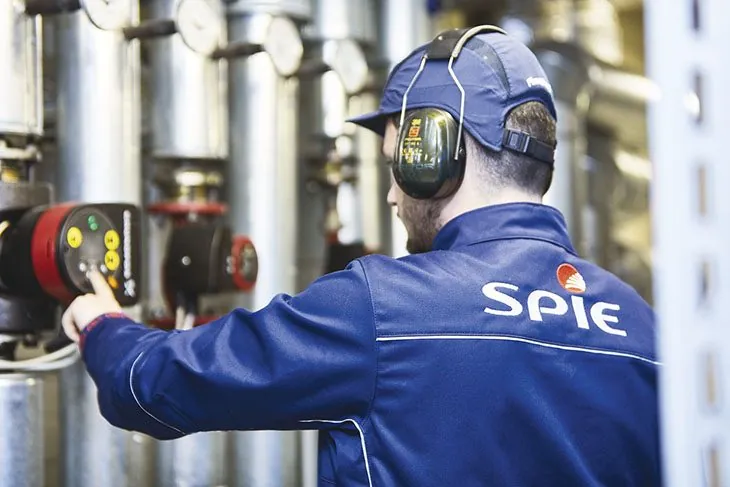
“The ‘ Teamenergy ’ approach has helped me manage collaboration and team dynamics more effectively.”
What the team did.
- 1
The measurement
How people experience their work, what the atmosphere is like, and whether the workload is manageable.
- 2
The Conversation
Does the job really suit people?
- 3
Get Started on Your Own
You know where to start; the team will take care of the rest.
- 4
Measure again
The team wants to take another measurement to continue monitoring the progress.
What changed.
- Focused primarily on tasks and deadlinesMore time and attention for each other
- Everyone on their own islandColleagues are stepping off their "islands" more often
Now.
There is more calm, clarity, and understanding within the team.
According to Mark, the greatest benefit is raising awareness.
The Story of Mark de Vries
As a team, we’re primarily focused on the work that needs to be done. I didn’t have a very clear picture of how things were really going within the team—whether people were enjoying their work and how we were collaborating. But how do you make that visible? To be honest, I had my doubts; the “ Teamenergy ” approach sounded a bit abstract and even a little vague. The question that was central to me was: where exactly does that lie? And what does that require of me as a leader?
At the same time, I was looking for a way to gain a clearer understanding of exactly that. The question was: What real benefits does this approach actually bring us in practice?
The " Teamenergy" approach proved to be surprisingly valuable. The assessment provided insight into how people feel about their work and how we interact with one another Collaborate. As a result, there was more calm, clarity, and better collaboration within the team.
Insights that help us steer the course together
The survey provided insight into how people experience their work. During the discussion of the results, it became clear whether the work was truly a good fit for them. We also gained a better understanding of one another: how our colleagues are doing, what the work environment is like, and whether the workload is manageable.
It was precisely those insights that proved to be very helpful to me as a manager, and they continue to have an impact on the team.
Greater attention and better cooperation
I’ve noticed that colleagues are making more time for each other. They’re listening more attentively and aren’t just focused on tasks and deadlines. Whereas there used to be little Space for coordination, there’s now more attention paid to each other’s questions and perspectives.
People are stepping outside their comfort zones more often. The collaboration is clearly growing.
Targeted Improvement Through a Practical Approach
For me, the " Teamenergy" approach isn't a magic bullet, but a practical approach. It helps clarify where the bottlenecks are and what you, as a team, can influence.
These insights provide direction and guidance for targeted improvements. You’ll have to put them into practice yourself, but at least you know where to start.
Awareness as a Starting Point
The " Teamenergy" approach has fostered greater understanding and connection within the team. The greatest benefit is awareness. It all starts with seeing what’s really going on. If you don’t see the underlying issues, you can’t find a solution. That’s why we want to measure our progress again and continue to make our development visible.
“The ‘ Teamenergy ’ approach has helped me manage collaboration and team dynamics more effectively.”

Do you recognize this in your team?
Perform better while having more fun,
now for truly every team.
You can see what’s putting pressure on your team’s performance, and the team takes care of it on its own. A follow-up assessment after 4 months will show whether the team is making progress.
- Anonymous at the team level
- Data remains within the EU
- Used by more than 700 teams